Who Holds Your Bitcoin? The Custody Decision That Shapes Every Other Trading Choice You Make
Most US Bitcoin traders spend considerable time analyzing price charts, evaluating entry points, and calculating position sizes. Far fewer apply equivalent rigor to a decision that underlies all of those activities: where their Bitcoin is held, and by whom.
Custody — the question of who controls the private keys to your Bitcoin — is not a peripheral concern. It determines how quickly you can trade, what protections apply if something goes wrong, how accurately your tax records reflect your activity, and whether a platform failure or security breach could permanently erase your holdings. This article examines those trade-offs in depth and offers a structured framework for matching custody models to specific trader profiles.
The Fundamental Divide: Self-Custody Versus Exchange Custody
At its core, the custody question reduces to a single distinction. In self-custody arrangements, the holder controls the private keys directly — typically through a hardware wallet such as a Ledger or Trezor device, or through an air-gapped cold storage configuration. The Bitcoin exists on the blockchain; the keys that authorize its movement exist only in the holder's possession.
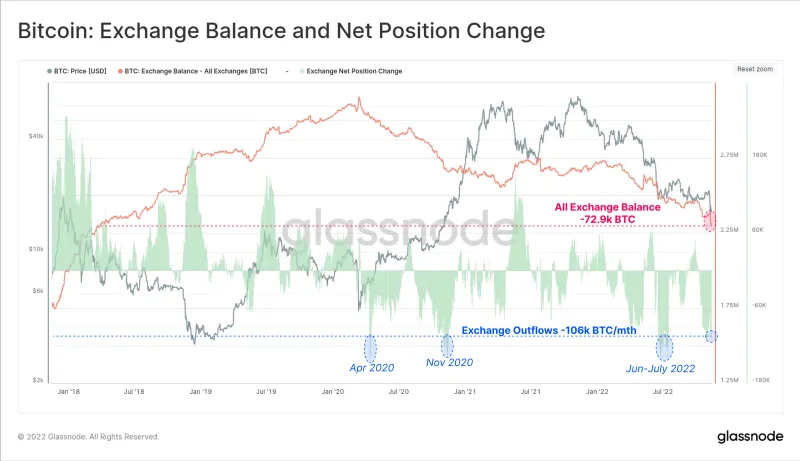
In exchange custody arrangements, the exchange holds the private keys on the user's behalf. The user holds a claim against the exchange — a balance reflected in a database — rather than direct ownership of on-chain Bitcoin. This is a meaningful legal and practical distinction, as the failures of FTX, Celsius, and Voyager demonstrated with considerable clarity for US account holders.
Trading Speed: Where Exchange Custody Wins Decisively
For any trader whose strategy depends on rapid execution — day traders, swing traders, participants in volatile intraday moves — exchange custody is a functional requirement, not merely a convenience.
Bitcoin on a hardware wallet cannot be sold in response to a market development without first connecting the device, authorizing a transaction, broadcasting it to the network, and waiting for on-chain confirmation. In periods of network congestion, that process can take 30 minutes or longer. For a trader attempting to exit a position during a flash crash or a sudden liquidity event, that delay is unacceptable.
Exchange custody eliminates settlement latency. A sell order executes against the exchange's internal order book instantly. No blockchain confirmation is required because no on-chain transaction has occurred — the exchange simply updates internal ledger entries. This speed advantage is real and substantial for active traders.
Security and Insurance: Where the Trade-Offs Become Complex
The security calculus is more nuanced than the common narrative suggests.
Self-custody eliminates counterparty risk — the risk that an exchange is hacked, becomes insolvent, freezes withdrawals, or is subjected to regulatory action that impairs your access to funds. These are not theoretical risks. They are documented outcomes that affected hundreds of thousands of US account holders across multiple platform failures in the past several years.
However, self-custody introduces personal security risks that should not be minimized. Hardware wallet failures, lost seed phrases, device theft, and sophisticated phishing attacks targeting self-custody users are all documented causes of permanent Bitcoin loss. Unlike a bank account, there is no customer service line to call and no recovery mechanism if private keys are compromised or destroyed.
Exchange custody on reputable US platforms — those registered with FinCEN and operating under applicable state money transmission licenses — offers some institutional protections. Coinbase, for example, maintains crime insurance covering certain types of custodial losses. However, this insurance does not function like FDIC coverage. It does not guarantee full recovery of user funds in all loss scenarios, and its terms are subject to change.
The honest assessment is that neither custody model is unconditionally safer. The relevant question is which risks are more manageable given your specific circumstances.
Tax Reporting Accuracy: An Underappreciated Dimension
The custody decision has direct implications for tax reporting quality, a consideration that receives insufficient attention.
Bitcoin held on a regulated US exchange generates transaction records that the exchange maintains and, in many cases, reports directly to the IRS via 1099 forms. This creates a ready-made audit trail, though traders should verify that exchange-generated tax reports accurately reflect their specific accounting method — FIFO, HIFO, or specific identification — rather than accepting default calculations uncritically.
Self-custody activity across multiple wallets, particularly when it involves transfers between wallets, interactions with decentralized protocols, or peer-to-peer transactions, creates a more complex record-keeping burden. Each transfer must be documented to establish that it does not constitute a taxable disposition. Failure to maintain adequate records can result in the IRS treating the cost basis of transferred coins as zero — effectively treating the entire sale proceeds as taxable gain.
For traders who move Bitcoin between self-custody and exchange wallets frequently, dedicated crypto tax software capable of importing both on-chain and exchange transaction histories is essential, not optional.
A Decision Matrix by Trader Profile
Different market participants have legitimately different custody needs. The following framework provides a starting point.
Active Day Traders: Exchange custody is functionally required. Execution speed takes priority. Mitigate counterparty risk by distributing holdings across two or more regulated US exchanges rather than concentrating all assets on a single platform. Maintain only the capital needed for near-term trading activity on any single exchange.
Swing Traders with Multi-Day Hold Periods: A hybrid model is appropriate. Keep active trading capital on exchange. Move profits or reserve capital to self-custody hardware wallets on a regular schedule. This approach limits exchange exposure while preserving operational flexibility.
Long-Term Holders with Minimal Trading Activity: Self-custody through a hardware wallet, with a properly secured and geographically distributed seed phrase backup, is the appropriate default. The speed disadvantage is irrelevant when holding periods are measured in months or years. Counterparty risk elimination is the dominant consideration.
Institutional or High-Net-Worth Traders: Qualified custodians — regulated entities that provide institutional-grade custody services, often with specific insurance arrangements and segregated account structures — merit serious evaluation. These services are increasingly accessible to US-based traders managing significant positions.
The Question No Trader Should Avoid
The Bitcoin market has produced extraordinary returns for patient, disciplined participants. It has also produced catastrophic losses for those who allowed their custody arrangements to become an afterthought.
Asking where your Bitcoin is held, who controls the keys, what protections apply if that arrangement fails, and whether that structure aligns with how you actually trade is not a distraction from market analysis. It is market analysis — applied to the foundational layer of your portfolio.