The Numbers Behind the Hype: Why Leveraged Bitcoin Trading Consistently Destroys Retail Capital
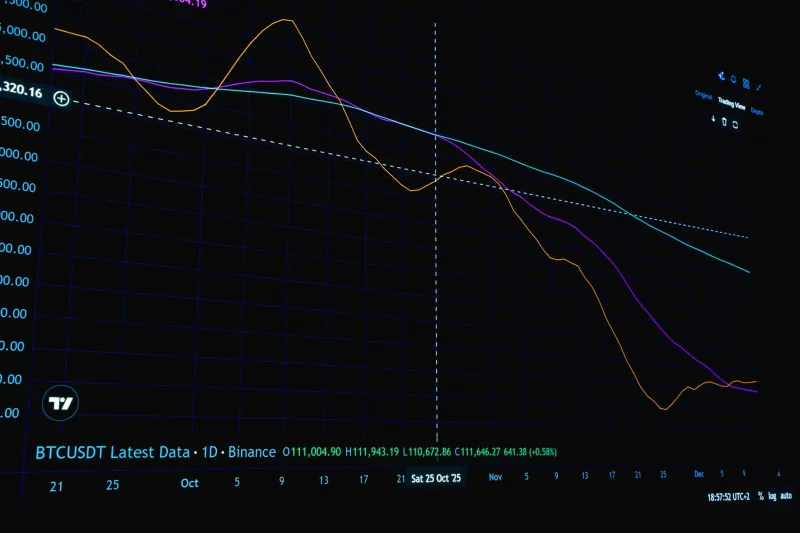
The pitch is familiar to anyone who has spent time on a cryptocurrency exchange. Leverage amplifies your buying power. A 10x position turns a 5 percent move into a 50 percent return. You only need to be right once to change your financial situation. The marketing is compelling, the mechanics are simple to understand, and the appeal to ambition is deliberately calibrated.
What the marketing does not include is the statistical record of what actually happens to retail traders who use leverage in Bitcoin markets. That record, assembled from liquidation data, academic research on trader behavior, and exchange-level reporting, presents a substantially less attractive picture.
What Liquidation Data Actually Shows
Cryptocurrency data aggregators track liquidation events—the forced closure of leveraged positions when losses reach the margin threshold—in near real time. During periods of elevated volatility, the scale of these events is striking.
During the May 2021 drawdown, over $8 billion in leveraged positions were liquidated within a 24-hour period across major derivatives exchanges. In November 2022, during the collapse of FTX and the associated market panic, liquidations exceeded $700 million in a single hour at peak intensity. In August 2024, a rapid 20 percent correction over 72 hours triggered more than $1 billion in forced closures.
These are not edge cases. Liquidation events of this magnitude occur multiple times per year in Bitcoin markets, and they share a consistent characteristic: retail traders are disproportionately represented among those liquidated, while institutional desks—which have wider risk parameters, access to hedging instruments, and dedicated risk management infrastructure—are more likely to survive the same volatility.
The asymmetry is structural. Retail traders using 10x to 25x leverage require only a 4 to 10 percent adverse move to reach full liquidation. Bitcoin regularly moves 5 to 15 percent within a single trading session. The overlap between those two facts is where retail capital disappears.
Drawdown Severity: The Mathematics of Ruin
A straightforward comparison between leveraged and unleveraged positions illustrates the severity of the disparity in a way that abstract warnings do not.
Consider a trader holding 1 BTC at $60,000 with no leverage. During a 30 percent drawdown—a routine occurrence in Bitcoin's historical record—the position loses $18,000 in paper value. The position survives. The trader retains the option to hold through recovery, average down, or exit at a defined loss.
Now consider a trader who uses 5x leverage to control the equivalent of 5 BTC with $60,000 in margin. A 20 percent adverse move—well within Bitcoin's normal volatility range—eliminates the entire margin balance and triggers liquidation. The trader exits with zero capital and no ability to participate in any subsequent recovery.
The unleveraged trader's worst case is a painful but recoverable loss. The leveraged trader's worst case is total capital destruction. The historical frequency with which Bitcoin produces 20 to 30 percent drawdowns—approximately every three to four months on average across the 2018 to 2024 period—means the leveraged trader's worst case is not a tail risk. It is a recurring probability.
The Psychological Architecture of Overconfidence
Beyond the mathematics, behavioral research provides a second layer of explanation for why leverage performs poorly in retail hands.
Studies on overconfidence bias in financial decision-making consistently find that retail traders overestimate both the accuracy of their directional predictions and their ability to time exits before losses compound. In leveraged environments, this overconfidence is particularly destructive because the margin for error is so narrow.
A retail trader with an unleveraged position who is wrong about direction has time to reassess, cut the position, or wait for conditions to change. A retail trader with a 10x leveraged position who is wrong about direction has, in many cases, minutes before the exchange liquidates them automatically.
Research published in the Journal of Finance and related behavioral economics literature also documents the disposition effect—the tendency of retail investors to hold losing positions too long and close winning positions too quickly. In a leveraged context, holding a losing position too long does not result in a larger paper loss. It results in liquidation.
The combination of overconfidence about entry timing and the disposition effect applied to leveraged positions creates a behavioral profile that is almost perfectly designed to accelerate capital loss.
What the Exchange Economics Reveal
It is worth understanding the incentive structure of the entities that provide leverage. Exchanges earn fees on every leveraged transaction—entry, exit, and funding rates on positions held overnight. Perpetual futures contracts, the most common vehicle for retail leverage in Bitcoin markets, charge funding rates that can reach 0.1 percent every eight hours during periods of elevated long-side demand. Annualized, that rate approaches 109 percent on the notional position value.
This means a leveraged long position in Bitcoin must not only be directionally correct—it must appreciate fast enough to overcome both the funding rate drag and the amplified liquidation risk. The hurdle rate for leveraged trading to be profitable, when all costs are included, is substantially higher than most retail participants calculate before entering a position.
Exchanges profit regardless of whether individual traders win or lose. The fee income from liquidation events is, in some respects, more reliable than the fee income from profitable trades, because liquidations generate forced transactions at the worst possible moment for the trader.
The Contrarian Case for Unleveraged Bitcoin Exposure
Bitcoin's historical annualized return, across multiple market cycles, has been among the highest of any tracked asset class. A trader who held unleveraged BTC through the 2018 to 2024 period, including multiple 50 to 80 percent drawdowns, and did not add leverage at any point, would have substantially outperformed the average leveraged trader whose capital was periodically liquidated and had to be replenished before each recovery.
The unleveraged position captures the asset's full upside without the forced exit problem. The leveraged position amplifies potential gains but introduces the very real possibility of being removed from the trade entirely at the worst possible moment—precisely when holding would have been most rewarding.
For most retail traders in the United States, the data supports a straightforward conclusion: Bitcoin's native volatility already provides more than sufficient return opportunity without the addition of borrowed capital. Leverage does not improve the odds. It shortens the window in which those odds must play out—and that compression is where retail capital consistently disappears.
At TNA BTC, we believe that understanding the statistical reality of leverage is not a reason to avoid Bitcoin. It is a reason to approach it with the discipline that the asset's genuine opportunity actually rewards.