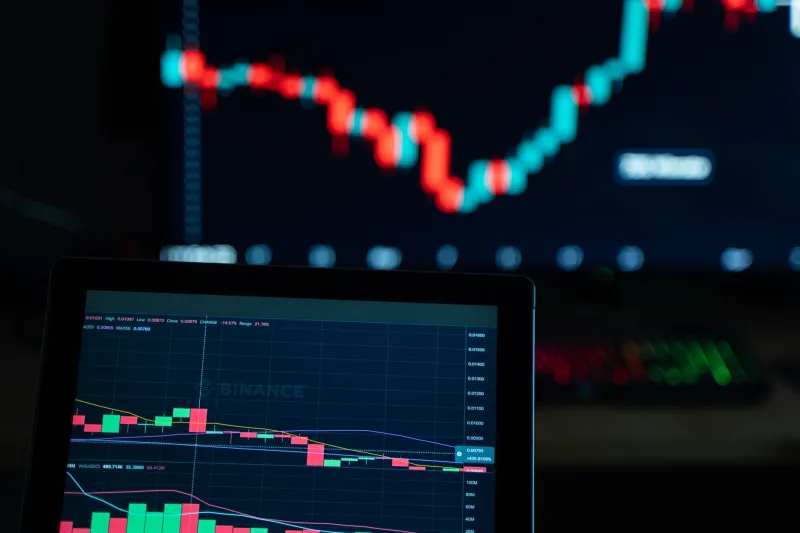
Reading the Fade: A Trader's Framework for Catching Bitcoin Trend Exhaustion Early

Reading the Fade: A Trader's Framework for Catching Bitcoin Trend Exhaustion Early
Every seasoned Bitcoin trader has experienced the same gut punch: a trend that appeared unbreakable suddenly collapses, and the warning signs were there all along — just not in the places most people were looking. Catching a reversal early is one of the most valuable — and most difficult — skills in crypto trading. It demands synthesizing multiple data streams simultaneously and distinguishing genuine exhaustion from ordinary consolidation.
This article presents a structured, repeatable framework for US traders who want to identify trend reversals before the broader market reacts. The signals discussed here are grounded in observable market data, not speculation.
Why Price Alone Will Always Mislead You
The most common mistake retail traders make is treating price as the primary signal. Price is a lagging indicator — it reflects decisions already made. By the time a reversal is visible on a basic candlestick chart, institutional participants have typically been repositioning for days, sometimes longer.
The traders who consistently profit from reversals are reading the market's internal structure: the momentum beneath the surface, the behavioral fingerprints left in derivatives markets, and the divergences between what price is doing and what everything else is doing. Price confirms; everything else anticipates.
Momentum Divergence: The First Warning Flag
The Relative Strength Index (RSI) and MACD are among the most widely used momentum indicators in Bitcoin technical analysis — and among the most frequently misread. A divergence occurs when price makes a new high or low that is not confirmed by the momentum indicator. This disconnect is one of the earliest and most reliable signals that a trend is losing internal strength.
Consider a scenario familiar to many US traders: Bitcoin grinds to a new local high around $72,000, but RSI on the daily chart prints a lower high than it did at the previous peak near $69,000. Price is ascending; momentum is declining. That gap is the market whispering that fewer buyers are willing to chase price at these levels.
Bearish divergence on the RSI — particularly on the 4-hour and daily timeframes — deserves serious attention when it appears after an extended uptrend. The key is patience: a single divergence is a caution flag, not a sell signal. Look for confirmation across multiple timeframes before acting.
For downtrends, bullish divergence works the same way in reverse. When Bitcoin is making lower lows but RSI is making higher lows, selling pressure is decelerating even if price hasn't reflected it yet.
Funding Rates: What Derivatives Traders Are Actually Betting On
Perpetual futures are the dominant trading vehicle in Bitcoin markets, and funding rates — the periodic payments exchanged between long and short position holders — offer a direct window into market sentiment. Extreme positive funding rates indicate that longs are paying shorts to maintain their positions, which signals an overcrowded trade.
Historically, sustained positive funding rates above 0.05% to 0.10% per 8-hour period have preceded sharp corrections. The logic is straightforward: when too many traders are positioned in the same direction, the market has a mechanical incentive to move against them. Liquidation cascades amplify these moves significantly.
US traders monitoring platforms that display aggregated funding rate data should watch for funding rates that remain elevated for multiple consecutive days during an uptrend. That persistence, combined with price struggling to make new highs, is a powerful combination signaling that the trend may be running on fumes.
Conversely, deeply negative funding rates during a downtrend — where shorts are paying longs — indicate excessive pessimism and can precede sharp relief rallies or full reversals.
Options Market Positioning: Reading the Smart Money's Hedges
The Bitcoin options market has matured considerably, and the data it produces is invaluable for traders who know how to interpret it. Two metrics deserve particular attention: the put/call ratio and implied volatility skew.
The put/call ratio measures the volume of put options (bets on price decline) relative to call options (bets on price increase). A rising put/call ratio during an uptrend suggests that sophisticated market participants are purchasing downside protection — a meaningful signal that those with the most information are hedging against a reversal.
Implied volatility skew examines the difference in implied volatility between out-of-the-money puts and calls. When put options carry significantly higher implied volatility than equivalent calls, it indicates that the market is pricing in a greater probability of a sharp downside move. This skew often shifts before price confirms the reversal.
For US traders with access to platforms offering Bitcoin options analytics, monitoring weekly changes in skew can provide a meaningful edge, particularly around key resistance levels or after extended directional runs.
Volume Behavior at Extremes: The Exhaustion Candle
Volume analysis adds a critical dimension to the reversal framework. During healthy trends, volume tends to expand in the direction of the trend and contract during pullbacks. When this relationship inverts — when price reaches new highs on declining volume — it signals waning conviction among buyers.
A particularly significant pattern is the high-volume rejection candle: a large-bodied candle that pushes aggressively into new territory but closes well off its extreme, often forming a wick. When this occurs on above-average volume at a key resistance level, it suggests that sellers absorbed the buying pressure decisively. This is sometimes called an exhaustion candle, and it frequently marks the beginning of a meaningful reversal.
Combining this pattern with RSI divergence and elevated funding rates creates a confluence that significantly increases the reliability of any reversal signal.
Building the Decision Framework: Confluence Over Conviction
No single indicator is sufficient to trade a reversal with confidence. The framework that separates disciplined traders from impulsive ones is built on confluence — the alignment of multiple independent signals pointing in the same direction.
A practical checklist for identifying potential trend exhaustion might look like this:
- Momentum divergence present on at least two timeframes (e.g., 4-hour and daily RSI)
- Funding rates at historically elevated or depressed extremes for the current trend direction
- Options skew shifting toward downside protection during an uptrend (or upside calls during a downtrend)
- Volume behavior showing declining participation at price extremes
- Price structure failing to sustain above key levels after multiple attempts
When three or more of these conditions align, the probability of a genuine reversal — rather than a temporary pullback — increases substantially. The more signals that converge, the stronger the case for repositioning.
Distinguishing a Reversal From a Retracement
One of the most costly mistakes traders make is confusing a healthy retracement with the beginning of a full reversal. The key distinction lies in the depth and structure of the move. A retracement typically respects established support levels — the 38.2% or 50% Fibonacci retracement zones are frequently cited reference points — and resumes the primary trend with renewed volume.
A reversal, by contrast, tends to break through these support zones, form lower highs on the subsequent bounce, and show continued deterioration in the underlying signals described above. Patience is essential. Waiting for a failed retest of a broken support level — where price attempts to reclaim the zone but is rejected — provides one of the cleaner entry points for traders positioning with the new trend.
Final Thoughts
Reading trend exhaustion before the market consensus shifts is a skill built through observation, data literacy, and disciplined pattern recognition. For US traders navigating Bitcoin's volatile cycles, the edge lies not in reacting to price but in interpreting the signals that price has not yet reflected. Momentum divergences, funding rate extremes, options market positioning, and volume behavior are the instruments of that analysis. Used together within a structured framework, they offer a meaningful advantage in one of the most competitive trading environments in modern finance.