Weekend Drift and Price Dislocation: Building a Rules-Based Bitcoin Gap Strategy for US Traders
Why Bitcoin's Weekend Sessions Are Different
Most financial markets operate on a schedule. The New York Stock Exchange closes at 4:00 PM Eastern on Friday and reopens Monday morning. Futures markets have brief maintenance windows. But Bitcoin never stops trading. That perpetual cycle creates a structural anomaly that serious traders should be paying close attention to every single weekend.
When traditional US financial markets go dark on Friday afternoon, institutional participation in Bitcoin markets drops sharply. Pension funds, hedge funds, and proprietary trading desks that use equities and macro data as reference points for their digital asset positions largely step back. What remains is a thinner, more retail-driven order book that is far more susceptible to sharp, sudden price moves — moves that often have little to do with genuine market conviction.
The result is what traders refer to as a price dislocation: a deviation from where Bitcoin was trading when institutional liquidity was present, driven not by fundamental repricing but by the mechanics of a temporarily shallow market.
The Mechanics Behind Weekend Gaps
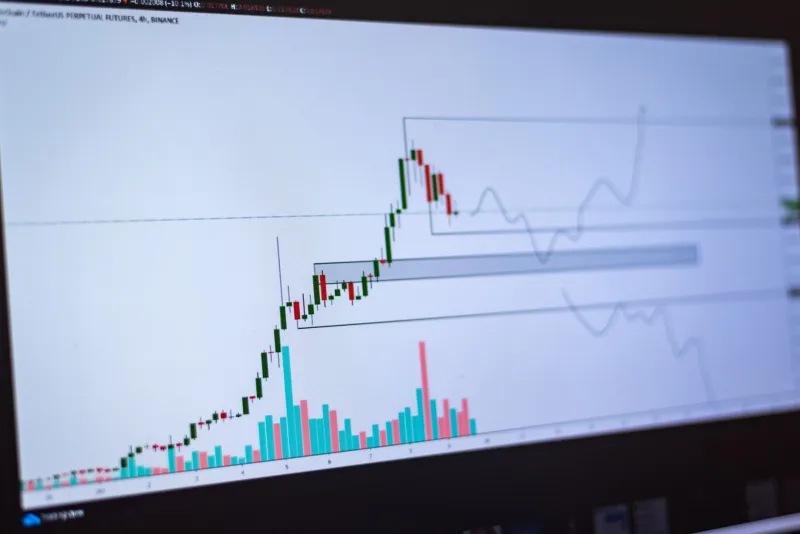
A gap, in traditional technical analysis, refers to the space between one session's closing price and the next session's opening price. In Bitcoin, where trading is continuous, gaps manifest differently. They appear as rapid vertical moves on lower-than-average volume, often leaving behind unfilled areas on the chart — zones where price traveled quickly without establishing meaningful two-sided trade.
Several factors converge to create these weekend dislocations:
Reduced liquidity depth. Market makers who rely on cross-asset hedging pull back when equities and futures are closed. Bid-ask spreads widen. A comparatively small order can move price significantly further than it would on a Tuesday afternoon.
Macro news flow without institutional response. Geopolitical developments, regulatory announcements, or macroeconomic data released over the weekend can move Bitcoin aggressively, but without the institutional counterbalancing that typically absorbs such moves during full market hours.
Derivative liquidation cascades. Leveraged positions on perpetual futures contracts are particularly vulnerable during low-liquidity windows. A modest directional move can trigger a chain of liquidations that accelerates price well beyond what fundamentals justify, creating an overshoot that the market eventually corrects.
CME futures gap formation. The CME Bitcoin futures market closes Friday at 4:00 PM Central and reopens Sunday evening. Any price movement that occurs in spot Bitcoin during that window creates a visible gap on the CME futures chart. Historically, CME gaps have demonstrated a meaningful tendency to fill — meaning price returns to close the gap — making them a reference point many institutional traders monitor.
Historical Context: When Gaps Have Mattered
The pattern has surfaced repeatedly across Bitcoin's trading history. In early 2021, Bitcoin experienced several notable weekend rallies that pushed price into territory that had not been established during CME trading hours. In multiple instances over the following days, price retraced into those gap zones before continuing the broader trend.
Similarly, during periods of elevated macro uncertainty in 2022, weekend moves to the downside — often triggered by regulatory headlines or broader risk-off sentiment — frequently overshot before partially recovering by Monday's US market open. Traders who understood the structural reason for those moves, rather than reacting emotionally to the price action, were better positioned to respond with discipline.
This is not a perfect or guaranteed pattern. But the recurrence is statistically meaningful enough to warrant a systematic approach.
Building the Framework: Fade or Follow?
The central question in any gap strategy is whether to fade the gap — trade against the direction of the weekend move, anticipating a reversion — or follow it, treating the dislocation as a legitimate signal of directional momentum.
The answer depends on context.
Conditions favoring a fade:
- The weekend move occurred on visibly below-average volume
- No significant fundamental catalyst explains the magnitude of the move
- Price has moved into a well-established resistance or support zone
- A CME gap has been created, suggesting a high-probability fill scenario
- The broader trend on the daily or weekly chart remains intact in the opposite direction
Conditions favoring a follow:
- The weekend move coincided with a major news catalyst (regulatory decision, ETF development, macroeconomic shock)
- Volume, while lower than weekday averages, is elevated relative to prior weekends
- Price has broken through a key technical level that had previously acted as strong resistance or support
- The move aligns with the prevailing higher-timeframe trend
A disciplined trader does not commit to one approach dogmatically. Instead, they evaluate each weekend setup against a defined checklist before taking any position.
Entry and Exit Framework
For fade setups, the preferred entry technique involves waiting for confirmation rather than anticipating the reversal. Entering as soon as Sunday evening or Monday pre-market opens can expose a trader to continued momentum before the reversion materializes. A more measured approach is to wait for a lower-timeframe structure shift — a failed attempt to extend the move, followed by a reversal candle on the one-hour or four-hour chart — before committing capital.
For follow setups, patience is equally important. Chasing a move that has already extended significantly increases risk-reward deterioration. The preferred entry is on a retest of the breakout level, where price pulls back to the zone it just broke through and demonstrates support or resistance before continuing.
Stop placement: For fade trades, stops should be placed beyond the extreme of the weekend move, not at an arbitrary dollar amount. This ensures the trade is invalidated only if the dislocation extends further rather than being stopped out by normal volatility.
For follow trades, stops below the retest level or the last significant swing low or high maintain logical structure.
Profit targets: The most natural target for a fade trade is the origin point of the weekend move — where price was trading before the dislocation began. For follow trades, prior swing highs or lows, or measured move projections, provide objective levels.
Risk Management Considerations for US Traders
Position sizing during weekend sessions should reflect the elevated volatility environment. A position that is appropriate for a Tuesday afternoon may carry substantially more risk on a Sunday evening when spreads are wider and liquidity is thinner. Many experienced traders reduce their standard position size by 25 to 50 percent for weekend gap plays specifically.
US traders should also be aware of the Sunday evening CME reopening as a key reference event. The first 30 minutes after the CME futures market reopens at 5:00 PM Central on Sunday often provides a meaningful signal about how institutional participants are responding to whatever occurred over the weekend. Monitoring that window before acting on a gap setup can add an additional layer of confirmation.
Finally, maintain a log of every weekend gap trade. Over time, your own data will reveal which conditions in your specific framework have historically produced the best outcomes, allowing for ongoing refinement.
The Edge Is in the Process
Weekend price dislocations in Bitcoin are not random noise. They are structural phenomena created by the intersection of a 24/7 asset and a traditional financial ecosystem that still operates on a five-day schedule. That intersection creates recurring opportunities for traders who understand why these moves happen and have built a rules-based process for responding to them.
The traders who profit consistently from these setups are not the ones reacting fastest. They are the ones who have done the analytical work in advance, defined their conditions clearly, and execute with discipline when those conditions align.